Microbiological Water Safety: From Biofilm to Smart Disinfection
Water is a living element: even when it appears clear, it can host a multitude of invisible microorganisms.
Bacteria, algae, and fungi are naturally present in water systems, but under certain conditions they can proliferate and form biofilms—resistant colonies that compromise water quality and system safety.
To ensure high hygienic standards in civil, healthcare, and industrial facilities, a scientific approach is required that combines monitoring, prevention, and automatic disinfection.
For years, the Termoacqua Group has been active in research and in the design of microbiological treatment systems capable of keeping water safe, stable, and compliant with European regulations.
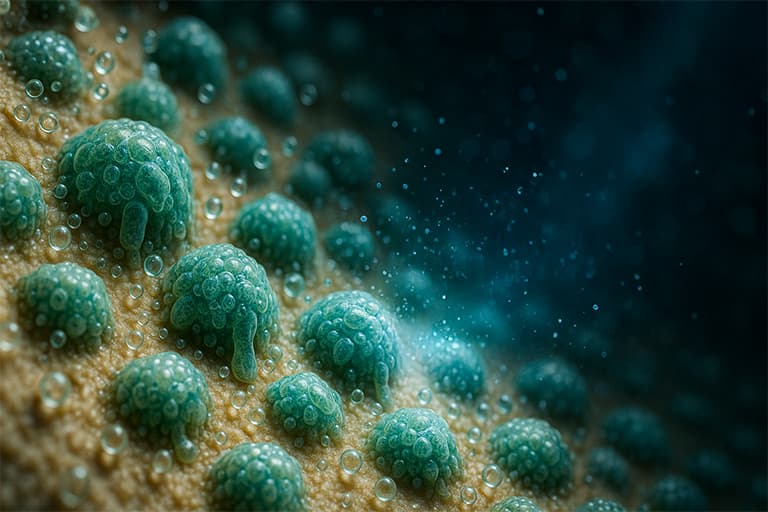
Biofilm is a viscous matrix produced by bacteria and microorganisms that adhere to the internal surfaces of pipes, heat exchangers, and tanks. Once formed, it becomes a physical and chemical barrier that protects bacteria from conventional disinfection, promoting constant recontamination of the water.
The main issues related to biofilm are:
- reduced effectiveness of disinfectants;
- clogging and loss of thermal efficiency in systems;
- increased risk of contamination by Legionella and other pathogens;
- accelerated corrosion of metallic materials.
Biofilm cannot be eliminated through sporadic treatments: a continuous and intelligent microbiological control strategy is required.
The European regulatory framework (EU Directive 2020/2184) and the Italian Ministry of Health Guidelines require water systems to guarantee constant microbiological parameters, particularly with regard to Legionella pneumophila and E. coli.
To comply with these standards, it is necessary to:
- implement monitoring plans with periodic sampling;
- adopt automatic and controlled disinfection systems;
- maintain traceability of treatment data;
- establish maintenance and cleaning protocols to prevent stagnation and buildup.
Regulatory compliance is not only a legal obligation, but a guarantee of public health and operational continuity.
Modern solutions for microbiological control are based on chemical and physical treatments that ensure consistent effectiveness and safe use.
- Traditional biocides
The use of sodium hypochlorite, chlorine dioxide, or hydrogen peroxide remains widespread due to their high disinfecting power. However, these substances require careful storage, transport, and handling to avoid environmental risks and corrosion. - In situ–produced hypochlorous acid (HOCl)
This is the most innovative and sustainable technology. Hypochlorous acid is a natural disinfectant generated by electrolysis of a saline solution, capable of eliminating bacteria and viruses in a few seconds.
Main advantages:
- no toxic by-products;
- stable, safe, and neutral pH;
- no need for chemical containers or transport;
- up to 90% reduction in plastic waste from containers. - PT5-certified chlorine dioxide and peroxide
Ideal for industrial circuits or evaporative cooling towers, they ensure deep and long-lasting disinfection. Termoacqua uses only PT5-certified products compliant with EU Biocidal Regulation 528/2012. - UV disinfection
Ultraviolet lamps neutralize microbial loads without chemical additives, representing a complementary solution in civil and healthcare systems.
The key to modern microbiological safety is automated and traceable disinfection. Termoacqua systems integrate:
- automatic proportional dosing based on conductivity and flow rate values;
- remote control units with real-time monitoring of disinfectant residuals;
- combined systems (e.g. HOCl + UV) for synergistic action against biofilm and Legionella;
- digital reports and predictive alarms, ensuring constant compliance and timely intervention.
In sensitive facilities such as hospitals and nursing homes, automation makes it possible to avoid system shutdowns during remediation operations, ensuring service continuity and user safety.
Termoacqua’s mission is not only to eliminate risk, but to prevent it.
Each system is analyzed in detail: temperature, materials, flow rates, and configurations are studied to identify critical points and design the most suitable disinfection system.
The Group’s team of biologists and chemists supports clients and operators with:
- customized microbiological prevention plans;
- technical staff training on proper water management;
- assistance in drafting and updating self-control plans (Water Safety Plans).
This multidisciplinary approach allows systems to remain safe, efficient, and compliant over time.
Microbiological safety must not result in increased chemical or energy consumption.
Thanks to in situ disinfectant production and digital process management, Termoacqua solutions guarantee:
- reduced operating costs;
- lower CO₂ emissions;
- no waste to dispose of;
- environmental control aligned with ESG objectives.
In this way, health protection becomes an integral part of industrial sustainability.
Ensuring the microbiological safety of water means protecting people, systems, and the environment.
With its smart disinfection technologies, Termoacqua offers solutions capable of combining effectiveness and sustainability, turning risk management into a competitive and reputational advantage.
Every drop treated safely is a step toward purer water—and toward a future where technology becomes synonymous with trust.