Water Softeners for Apartment Buildings: Tailored Solutions for Property Managers and Large Facilities
In apartment buildings, centralized systems, and large facilities, water quality directly impacts system efficiency, management costs, and equipment lifespan.
When water is particularly hard, limescale can deposit in pipes, heat exchangers, boilers, water heaters, and hydraulic components, leading to scale buildup, performance loss, and increased maintenance needs over time.
For this reason, apartment building water softeners represent an important technical solution for property managers, designers, maintenance technicians, and managers of large facilities.
Their goal is simple: reduce water hardness and protect systems from one of the most common issues in building water and thermal management.
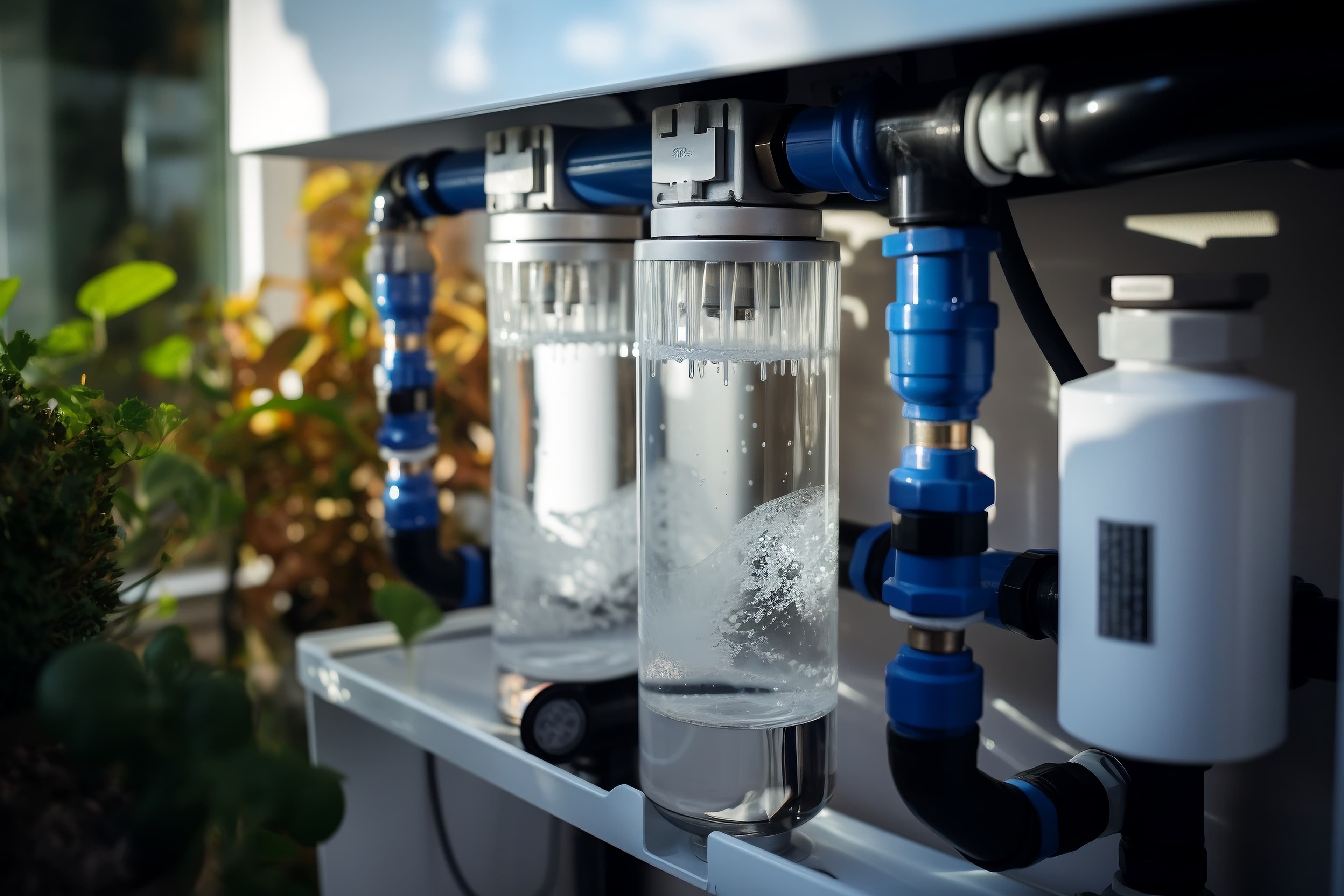
An apartment building water softener is a water treatment system designed to reduce the presence of calcium and magnesium salts, which are the main elements responsible for water hardness and limescale formation.
The most common operation is based on the principle of ion exchange.
Water passes through a bed of specific resins that retain calcium and magnesium ions, releasing sodium ions in their place and returning softened water.
In an apartment building, the water softener can be installed upstream of the system, treating the water before it is distributed to individual units or before it feeds specific technical sections of the building.
Its use is particularly recommended to protect:
- centralized boilers
- heating systems
- heat pumps
- water heaters
- faucets, valves, and hydraulic components
- household appliances
In a condominium or apartment building context, this aspect takes on even greater significance.
A single instance of scale buildup in a single-family home might create a disruption limited to just one household.
In a centralized system, however, the problem can affect many units simultaneously, resulting in more complex consequences for the property manager to handle.
According to the provisions of DPR no. 59 of April 2, 2009, the installation of an apartment building water softener is mandatory only when certain conditions are met.
Specifically, for systems intended for the production of domestic hot water with a capacity exceeding 100 kW, the water softener becomes mandatory when the water hardness exceeds 15°F, where 1°F corresponds to 10 mg of calcium carbonate per liter of water.
For systems with a capacity below 100 kW, however, the obligation is triggered only if the water hardness is higher than 25°F.
Even when not strictly mandatory, installing an apartment building water softener brings a series of benefits to the residents.
The goal is to limit the action of limescale, impurities, and particles present in the water, which over time can compromise the proper operation of equipment, reduce efficiency, and increase the risk of breakdowns or maintenance interventions.
The installation of a water softener offers concrete advantages from both a technical and a management standpoint.
A correctly sized water softener allows you to:
- reduce limescale formation
- protect boilers, heat exchangers, and water heaters
- maintain more efficient heat exchange
- limit the risk of breakdowns and anomalies
- reduce extraordinary maintenance interventions
- improve service continuity
- increase the lifespan of system components
- improve the energy efficiency of the systems
Routine building management can benefit as well. A more protected system is generally easier to monitor and allows for a more orderly maintenance planning.
This is an important aspect for property managers, who must balance efficiency, costs, reliability, and resident satisfaction.
Furthermore, softened water can help reduce deposits on faucets, showerheads, sanitary fixtures, and surfaces, improving the perceived water quality inside the homes.
In large apartment complexes, this aspect can become a concrete added value, as it directly impacts the daily experience of the users.
The cost of an apartment building water softener depends on numerous elements.
There is no one-size-fits-all solution for every building, because every system presents different conditions and requires a specific assessment.
In a small apartment building, a compact solution may be sufficient.
In a large facility, however, it may be necessary to provide more structured systems, with high flow rates and configurations designed to ensure continuity even during regeneration phases.
For this reason, a correct sizing of the system is essential in order to choose the most suitable equipment. At Termoacqua, we define tailored solutions, correctly sized based on water hardness and daily consumption.
This avoids approximate choices and identifies the most suitable system for the actual needs of the apartment building or large facility.
Termoacqua water softeners—available in cabinet, two-piece (twin-bed), duplex, and skid-mounted/structural steel versions—are assembled with the utmost care at the company plant, selecting quality components to ensure reliability and continuity of operation.
For property managers, designers, and technical supervisors, choosing a water softener from the Termoacqua group means investing in a more efficient and controlled management of the water system.
A well-designed solution protects equipment, reduces the risk of scale buildup, improves service continuity, and helps contain maintenance costs over time.